
SUSE and Infosys: Enhancing Operational Efficiency with AI-Native Telco Use Cases
SUSE and Infosys are partnering to showcase their joint demonstration at the SUSE booth during MWC 2026. This exhibition focuses on AI-native Telco use cases aimed at significantly enhancing operational efficiency within 5G networks. Given the rapidly evolving Telco landscape, Communications Service Providers (CSPs) face the imperative of moving beyond basic connectivity. They must deliver innovative, profitable services that leverage Artificial Intelligence in an efficient and sustainable way. A key highlight at the SUSE booth will be a specific AI-driven use case: RAN power optimization, detailed further below.
RAN power optimization
Radio Access Network (RAN) power consumption is a major financial burden for Communication Service Providers (CSPs), reportedly accounting for 80% of their total power costs. Optimizing this energy usage offers a significant opportunity to reduce CSPs’ OPEX. RAN power usage fluctuates based on various factors, including cell utilization, required coverage, and usage patterns across different times of day and days of the week. To address this, Infosys and SUSE have developed a joint proof of concept. This solution is vendor-agnostic, supporting any RAN and network function provider, and utilizes real-time Telco operational data to optimize RAN power consumption. The solution enables the CSP to make enhanced decisions on managing the RUs, including cell switch on/off, and RF channel on/off, and the subsequent steering of traffic to adjacent cells, without any degradation of service. The components of the SUSE-Infosys solution are described in the diagram below.
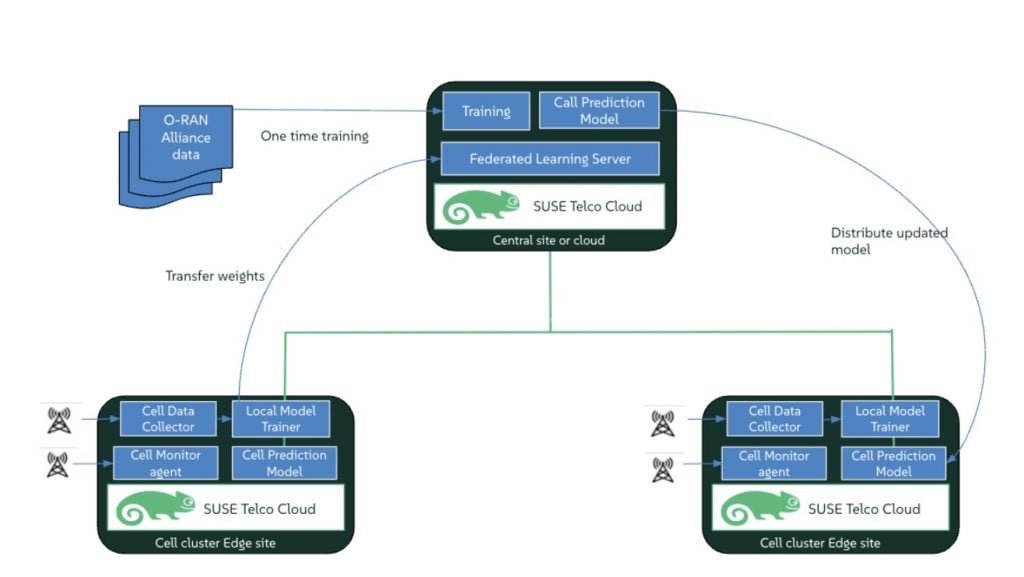
Figure 1: SUSE-Infosys RAN Power optimization solution architecture
Components of the RAN Power Optimization Solution
The RAN Power Optimization solution is a joint effort, with key contributions from both SUSE and Infosys:
- SUSE components
- SUSE Telco Cloud (STC) delivers the essential, AI-native, secure, and carrier-grade software foundation for telco infrastructure. Built on rigorously validated and hardened open-source components, including Linux and Kubernetes, STC’s primary strength is its “management first” approach. This methodology enables a fully automated, zero-touch provisioning of both management and workload clusters, which is vital for Communication Service Providers (CSPs) to efficiently provision and manage downstream RAN sites at a large scale.
- Infosys components
- Infosys delivers the AI-native software components that operate across the architecture.
- At the Telco Edge Sites: These components include the Cell Data Collectors, the Local Model Trainer, and the Cell Monitor Agents.
- On the Central Management Server: This server runs the Federated Learning Server, the Training module (for frequency analysis and pattern identification), and the Cell Prediction models (for energy prediction).
RAN Power Optimization Solution: Key Capabilities and Success Metrics
The joint SUSE-Infosys solution optimizes power consumption in the Radio Access Network (RAN) by employing intelligent ON/OFF operations. This is driven by an energy forecasting model that generates recommendations for Cell ON/OFF status and intelligent session handover to the next most suitable cell. The forecasting model and the deep learning based algorithms are described, at a high level, in the diagram below.
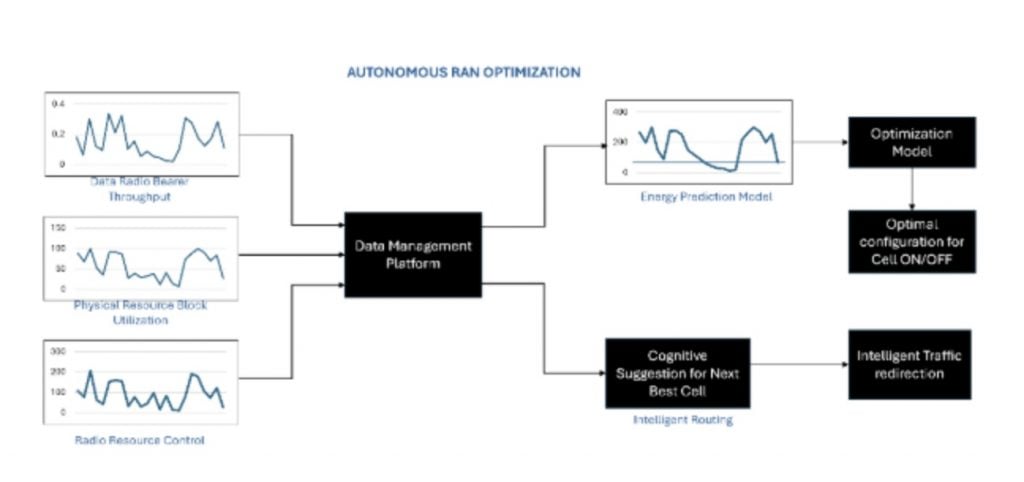
Figure 2: RAN energy forecasting model
These optimization recommendations are executed at the CU/DU Edge site through a closed-loop automation process. A critical component is the SUSE Telco Cloud, which provides an efficient, low footprint edge computing stack with security hardened Linux and Kubernetes components. STC also guarantees the high forwarding performance and low latency necessary to preserve the mobile user’s Quality of Experience (QoE).
The successful deployment of this solution is measured by two primary criteria:
- Zero Quality of Service (QoS) Degradation. This includes avoiding issues such as session or call drops and ensuring desired E-RAB success rate.
- Achievement of Predetermined level of energy reduction.
The sharp rise in energy usage, driven by 5G densification and increasing traffic, is escalating costs and posing a threat to sustainability efforts. Optimizing the power consumption of Radio Units and overall RAN power is therefore critical for Communication Service Providers (CSPs) to meet their profitability and sustainability targets. The SUSE-Infosys demonstration offers a solution to help CSPs achieve these essential goals.
Discover More at MWC 2026
Visit the SUSE booth to learn more about SUSE Telco Cloud and see demonstrations of the SUSE-Infosys Telco use cases.
Where: Mobile World Congress 2026, Barcelona
When: March 2nd through 5th
Location: Hall 2, Stand 2C31
Additional Resources
- SUSE Telecom Industry Solutions
- SUSE Telco Cloud Product Information
- Success Stories
- ABI Research report
- Project Sylva Blog
- Parallel Wireless and SUSE Partner to Deliver Hardware Agnostic Kubernetes-Enabled Solutions (Press Release)
Related Articles
