











July 22nd, 2026
SUSE and Parallel Wireless Joint Demonstration at MWC 2026
At MWC 2026, SUSE and Parallel Wireless will present an evolution of their integrated solution at the SUSE booth. This offering combines Parallel Wireless GreenRAN™, a hardware-agnostic, cloud-native RAN software platform, with SUSE Telco Cloud, creating a carrier-grade production RAN platform for Communications Service Providers (CSPs). The solution’s key benefits include exceptional performance, improved power efficiency, simplified lifecycle management, and broad compatibility with platforms based on Intel, AMD, and Arm silicon.
A significant advantage of the SUSE–Parallel Wireless solution is the flexibility it grants in platform selection. This capability is enabled by Parallel Wireless’ hardware-agnostic UNITY RAN software, which runs consistently across heterogeneous compute platforms without modification. Operators can select the platforms best suited for their network requirements, including Intel, AMD, or Arm, while utilizing common management workflows and maintaining a unified RAN software stack. By leveraging diversity in silicon vendors without fragmenting operations, operators can reduce Total Cost of Ownership (TCO) and avoid over- or under-utilization of expensive silicon components.
The solution is ideal for various deployment scenarios utilizing Intel, AMD or Arm-based systems, including:
- High Performing Macro Sites– tailored to the expected load.
- Small-cells– Deploying cost-optimized/low-processor count silicon/platforms.
- Public Safety & Private 5G–Supporting mission-critical and localized network needs.
Key Components of the Parallel Wireless GreenRAN™ on SUSE Telco Cloud demo
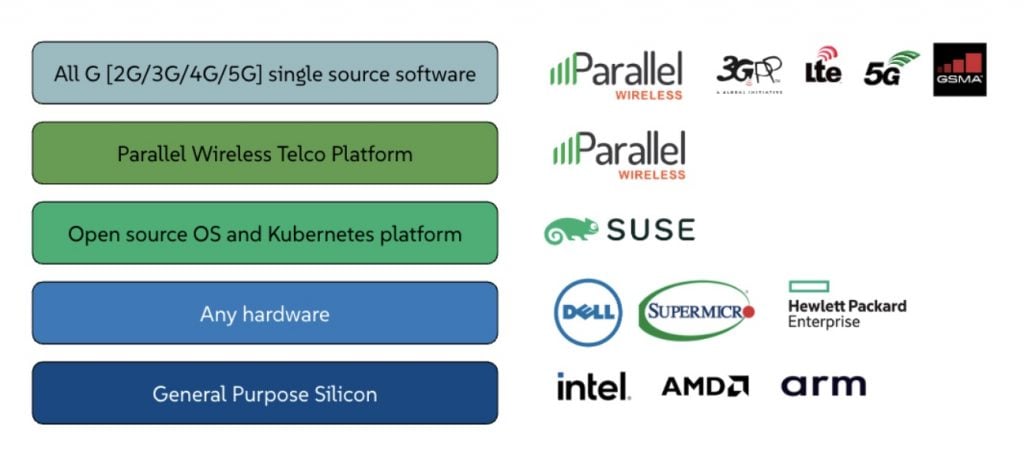
Figure 1: Parallel Wireless GreenRAN™ on SUSE Telco Cloud solution architecture
The Parallel Wireless GreenRAN™ solution, showcased in this demo, is a collaborative effort involving core contributions from SUSE, Parallel Wireless, and various hardware/silicon vendors.
- SUSE components
- SUSE Telco Cloud (STC) delivers the essential, AI-native, secure, and carrier-grade software foundation for telco infrastructure. Built on rigorously validated and hardened open-source components, including Linux and Kubernetes, STC’s primary strength is its “management first” approach. This methodology enables a fully automated, zero-touch provisioning of both management and workload clusters, which is vital for Communication Service Providers (CSPs) to efficiently provision and manage downstream RAN sites at a large scale. STC also guarantees the high forwarding performance and low latency necessary to preserve the mobile user’s Quality of Experience (QoE).
- Parallel Wireless components
- Parallel Wireless’ GreenRAN™ All-G O-RAN Software platform enables the seamless deployment of hardware agnostic radio systems. It is powered by the Parallel Wireless Service Management and Orchestration (PW-SMO) component that covers end-to-end deployment, management and maintenance of CSPs. The demo will go over the lifecycle of radio sites installed over Intel, AMD and ARM based architectures and showcase the ease of management by aggregation through a unified interface. In addition, each deployed site includes Parallel Wireless’ radio components including the RU and vBBU. The vBBU will be supported over multiple hardware architectures.
Parallel Wireless GreenRAN™ Solution: Key Capabilities and Success Metrics
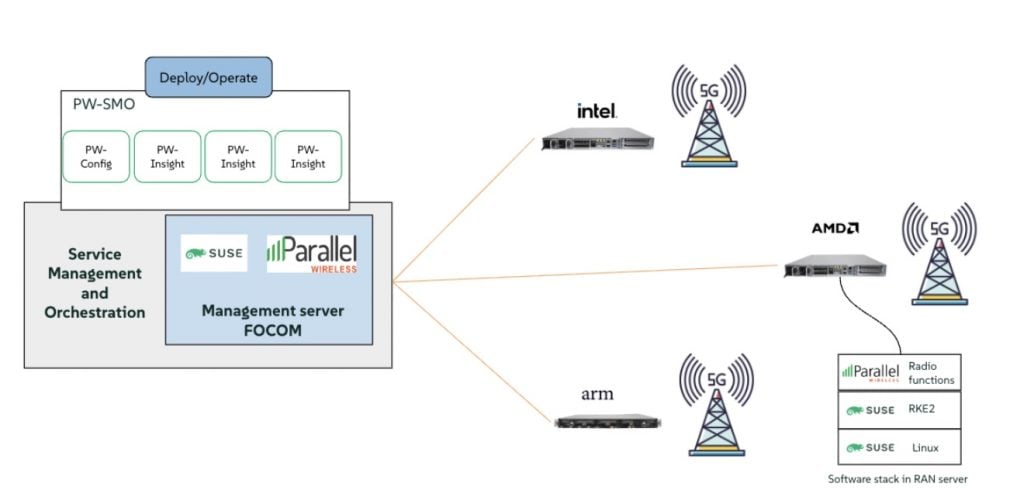
Figure 2: Parallel Wireless GreenRAN™ on SUSE Telco Cloud Lifecycle Management scenarios
The Parallel Wireless GreenRAN™ solution, illustrated in Figure 2, streamlines the lifecycle management of RAN sites and software stacks across various processor architectures.
Roles and responsibilities
SUSE Telco Cloud (STC), which is distributed across the RAN sites and the management server, is responsible for the discovery of the bare-metal systems, the provisioning and lifecycle management of the Operating system, and the Kubernetes clusters. STC also provides support for drivers and technologies such as PTP, DPDK, and SR-IOV to ensure carrier grade performance.
The PW-SMO utilizes Zero Touch Provisioning (ZTP) to orchestrate each phase of deployment right from bare-metal provisioning through cloud platform installation to discovery of Kubernetes clusters. In addition, PW-SMO deploys each Radio Technology and application over an end-to-end cloud-native architecture, including configuration and mapping of the remote radio heads (RRH), deployment of RAN network functions, and orchestration of PW RAN containers. The PW-SMO provides a unified interface (single pane of glass) for managing RAN site deployment, handling alarms and logs, tracking site KPI telemetry and upgrading platform software and radio network functions regardless of hardware architecture.
The successful deployment of this solution is measured by two primary criteria:
- Automated lifecycle management: The seamless, automated lifecycle management and fault handling of the platform software and radio network functions. This must span a diverse set of RAN sites powered by Intel, AMD, or ARM architectures, with orchestration provided by the PW-SMO and SUSE Telco Cloud.
- Carrier-grade performance: Achieving carrier-grade forwarding performance, Quality of Service (QoS), and Quality of Experience (QoE) that satisfies the requirements of Communication Service Providers (CSPs) deploying the RAN sites.
Discover More at MWC 2026
Visit the SUSE booth to learn more about SUSE Telco Cloud and see demonstrations of the SUSE-Parallel Wireless Telco use-cases.
Where: Mobile World Congress 2026, Barcelona
When: March 2nd through 5th
Location: Hall 2, Stand 2C31
Additional Resources
Related Articles

Rajesh Rajamani
Rajesh Rajamani leads Product Marketing for the Edge and Telco BUs at SUSE. Previously he has held Marketing leadership roles at Red Hat and Spirent, in Cloud, Telco, Networking, and Edge domains