
From Policy to Proof: Cracking the ‘Black Box’ of Digital Sovereignty
For years, digital sovereignty felt like a “tomorrow” problem. A complex box to check for the legal department. But now that we are in 2026, the conversation has shifted. It is no longer just about compliance; it is about whether you’re allowed to compete in your own market.
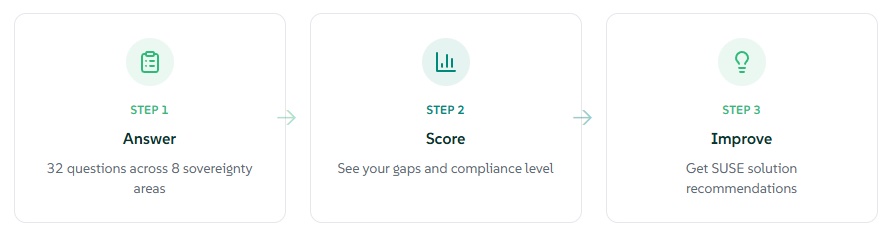
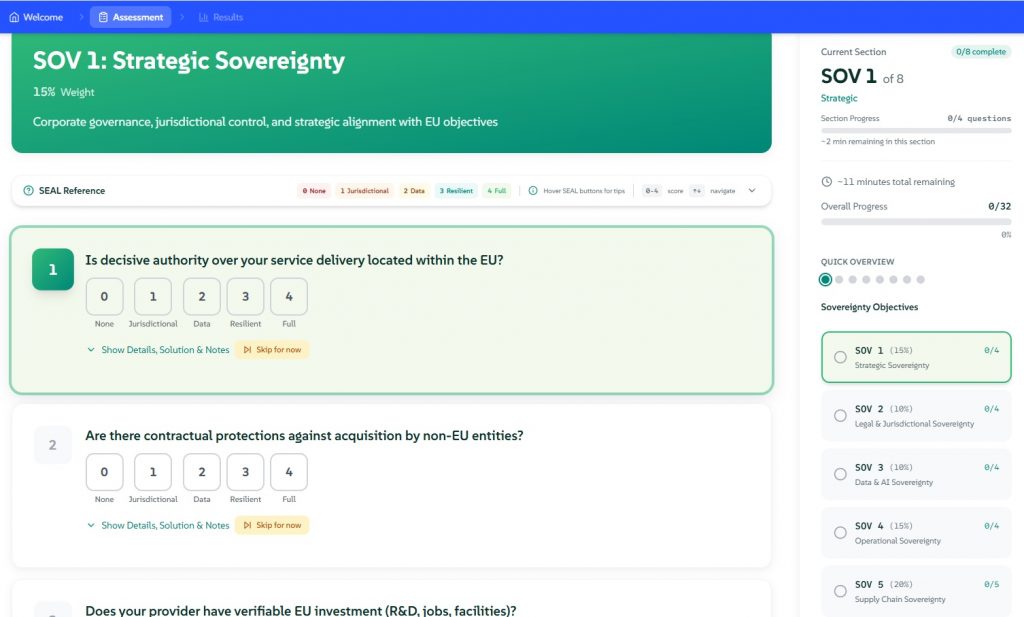
With Forrester predicting that digital and AI sovereignty will drive a private cloud renaissance, the stakes have never been higher. Yet, most organizations are hitting a wall. The 2025 EU Cloud Sovereignty Framework was meant to provide clarity. Instead, it created a ‘black box’ where a significant gap exists between high-level policy requirements and the actual technical stacks. To solve this, we are launching the Cloud Sovereignty Framework Self-Assessment—an industry-first tool designed to turn months of manual auditing into a 20-minute automated discovery process.
The EU framework: clear structure, complex execution
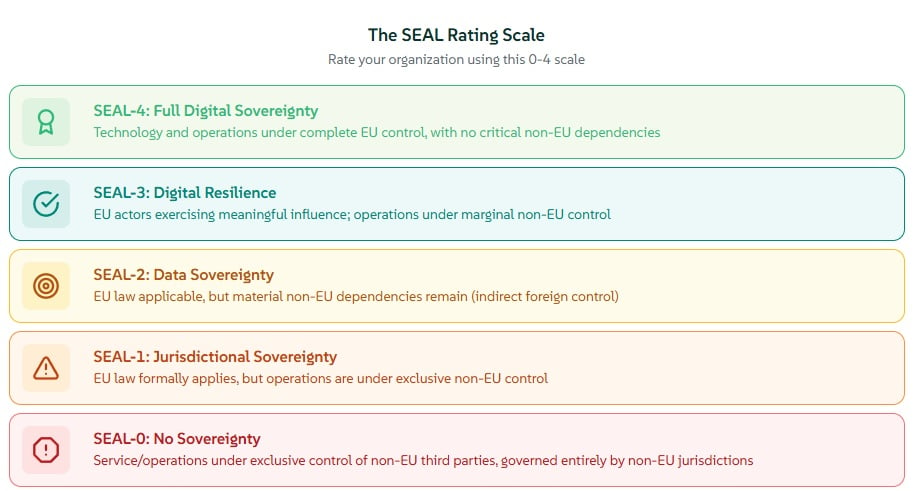
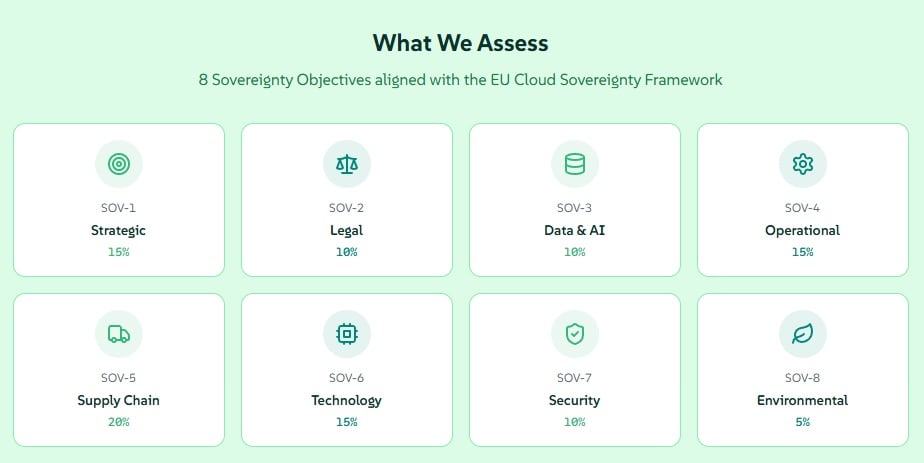
The 2025 EU Cloud Sovereignty Framework provides a robust and logical structure using eight Sovereignty Objectives (SOVs) and measures progress through five Sovereignty Effective Assurance Levels (SEAL 0-4). It is perfect on paper, but it often lacks the “how-to” required by technical teams to implement.
While the framework is exemplary in defining what sovereignty looks like, it often lacks the actionability required by technical teams. This creates a “policy-to-technology gap,” where there is a significant disconnect between regulatory requirements and the specific technical stack needed to fix vulnerabilities. Our assessment tool bridges this gap by transforming static policy into a prescriptive, product-backed roadmap that can be downloaded in a PDF format for future reference.
The strategic human element: from data to action
While the self-assessment provides a data-driven foundation, the journey toward digital autonomy often requires nuanced strategic planning. Sometimes, you need a sounding board to help you decide which fire to put out first.
This is where having SUSE as your trusted partner makes the difference. We can work alongside you to interpret your SEAL score within the context of your specific business goals and help you prioritize which gaps to close first. This collaborative approach ensures that your transition from “identifying a gap” to “executing a solution” is seamless, turning your PDF roadmap into a funded and executable project.
A C-Suite roadmap: key features of the assessment tool
This tool provides an objective benchmark for IT directors and C-level executives to justify budgets for digital autonomy initiatives.
- The SEAL Benchmark: The tool maps your infrastructure to one of five Sovereignty Effective Assurance Levels (SEAL 0-4). This creates a standardized language for discussing risk, such as identifying if current operations are SEAL-1 while upcoming contracts require SEAL-3.
- Weighted Risk Analysis: We know not all risks are equal. The tool prioritizes high-impact areas like Supply Chain (20%) and Operational Autonomy (15%), so you can focus your energy where it matters most.
- Privacy-First Engineering: Built for high-security environments, this tool is “privacy-first.” All assessment data remains local and private within your browser, ensuring you can benchmark risk without any data exposure or leakage concerns.
- Downloadable Consultative Roadmap: Upon completion, you receive a prescriptive gap analysis and an improvement plan that can be downloaded as a PDF to guide your technical roadmap.
The enterprise perspective: clarity in under 20 minutes
For many CIOs, the primary challenge has been the lack of a clear, actionable score to present to the board. One IT-leader from a European university recently shared their experience after using the platform:
“The Cloud Sovereignty Self-Assessment Tool is a game-changer for IT strategy. In just 15 minutes, I gained more insight than ever before. Simply answering the questions provided immediate clarity on our current sovereignty level, but the real value lies in the final recommendations. It delivered tangible results that I can confidently present to my leadership to influence our future IT investment decisions.” — Markus Scherer, Infrastructure Architect at University of Luxembourg.
Defining the scope of your assessment
To ensure the results of this self-assessment are truly actionable, be sure to define the scope before you begin. While it may be tempting to assess your entire enterprise at once, higher levels of abstraction often make it difficult to translate findings into concrete next steps. At the same time, focusing on a single, isolated technology component may overlook broader jurisdictional or supply chain risks that are central to the framework.
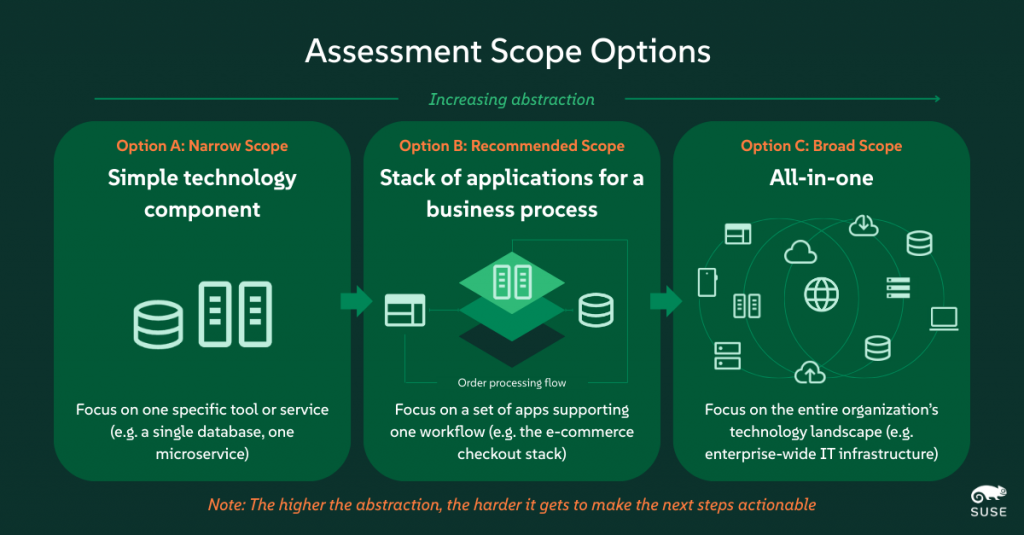
We recommend that you approach the assessment by focusing on a stack of applications that supports a specific business process. This “middle-ground” scope allows the tool to provide a prescriptive gap analysis that reaches right down to the OS and application layers. By keeping this specific environment in the back of your mind, the resulting SEAL score and improvement plan will be both comprehensive and immediately executable, transforming a vague conversation about sovereignty into a concrete technical roadmap.
Take control of your digital destiny
Without a proven digital sovereignty strategy, organizations risk contract ineligibility in increasingly regulated markets. Don’t leave your strategic autonomy to chance.
Ready to see where you stand? Take the SUSE Cloud Sovereignty Self-Assessment to benchmark your maturity, uncover critical gaps and get a clear, prescriptive roadmap to strengthen control, compliance and resilience.
Related Articles
Nov 05th, 2024
Why Edge Computing Is Essential for IoT-Based Manufacturing
Feb 25th, 2026
Google Cloud Next 2026 Guide: The Expert Guide and Pro Tips
